


What to Look for in a Good Suitcase: 10 Features That Matter
, by Tariq Rehman, 9 min reading time
, by Tariq Rehman, 9 min reading time
Buying a suitcase is about more than choosing the right colour or size. From wheels and handles to materials, compartments, security features and weight, several details can affect how practical your luggage is. Discover the 10 most important suitcase features to consider before buying your next piece of travel luggage.
A good suitcase should make travelling easier, not create additional problems.
Whether you're buying luggage for weekend trips, business travel, family holidays or international adventures, there are several features worth considering before making a purchase.
A suitcase may look stylish in a product photograph, but its real value comes from how well it performs when you're travelling.
The best luggage balances durability, organisation, portability, security, capacity and convenience.
So, what should you look for in a good suitcase?
Here are 10 features that matter.
One of the first things to consider is size.
The ideal suitcase size depends on how long you normally travel and how much you need to pack.
For example:
If you're buying luggage for air travel, always check the current baggage requirements of your airline.
Cabin and checked baggage restrictions can vary, so don't rely solely on a suitcase being labelled "cabin size" or "large."
Check the actual dimensions and weight before travelling.
The material used to construct a suitcase can affect its durability, weight and appearance.
Hard shell luggage is commonly made using materials such as ABS or polycarbonate, while soft luggage is often made from fabrics such as polyester or nylon.
Each material has its own characteristics.
Hard shell luggage provides a structured exterior, while soft luggage can offer greater flexibility and convenient external pockets.
Rather than choosing based purely on whether a suitcase is hard or soft, pay attention to the quality of the construction.
A good suitcase should be capable of handling regular travel without showing excessive wear too quickly.
Wheels are one of the most important features on modern luggage.
A suitcase can have plenty of storage space, but if its wheels are difficult to manoeuvre, travelling with it can quickly become frustrating.
Look for wheels that roll smoothly and allow the suitcase to move easily.
Four-wheel spinner suitcases are particularly popular because they can generally be moved in multiple directions.
Two-wheel luggage can also be practical and may perform well on certain surfaces.
When choosing a suitcase, consider where you normally travel.
Smooth airport floors are very different from uneven pavements, cobbled streets and other outdoor surfaces.
The handle is another feature that can make a significant difference.
A telescopic handle allows you to pull or manoeuvre your suitcase without carrying it.
A good handle should feel secure when extended and should move smoothly between its available positions.
Check whether the handle feels sturdy rather than excessively loose or flimsy.
If possible, test the handle before purchasing the suitcase.
Small design details can make a noticeable difference when you're pulling luggage through an airport or railway station.
A suitcase isn't just an exterior shell—it needs to work well inside too.
Good interior organisation can make packing significantly easier.
Look for features such as:
Interior organisation can help keep clothing separated and make it easier to find your belongings during a trip.
Some travellers also use packing cubes to create additional organisation inside their luggage.
External pockets are particularly useful on soft-sided luggage.
They provide quick access to items that you may need during your journey without opening the entire suitcase.
You could use an exterior compartment for:
Hard shell suitcases tend to have fewer accessible external pockets, although some modern designs include front compartments.
If easy access matters to you, consider this feature carefully before buying.
Suitcase weight matters, particularly when you're travelling by air.
Airlines may have weight limits for checked and cabin baggage. A heavy suitcase uses more of your allowance before you've even packed your belongings.
For this reason, lightweight luggage can be a practical choice.
However, lightweight doesn't necessarily mean you should sacrifice durability.
Look for a suitcase that combines a manageable empty weight with construction that feels suitable for regular use.
The goal is to maximise the amount you can pack without creating an unnecessarily heavy bag.
A suitcase needs a reliable closure system to keep your belongings secure.
Zippers should open and close smoothly without feeling weak or poorly constructed.
Some luggage designs also include additional security features, such as combination locks or TSA-compatible locks.
Security features can provide extra peace of mind when travelling, but they should not replace sensible travel practices.
Keep valuable items such as important documents, cash and expensive electronics appropriately secured and follow the security requirements of your destination and airline.
Expandable luggage can be useful if you sometimes need additional packing space.
Some suitcases feature an expandable section that can be opened to increase their capacity.
This can be particularly convenient if you expect to bring souvenirs or additional purchases home.
However, extra space can also encourage overpacking.
A suitcase should still remain within applicable airline size and weight restrictions when expanded.
Before using the additional capacity, check your baggage allowance.
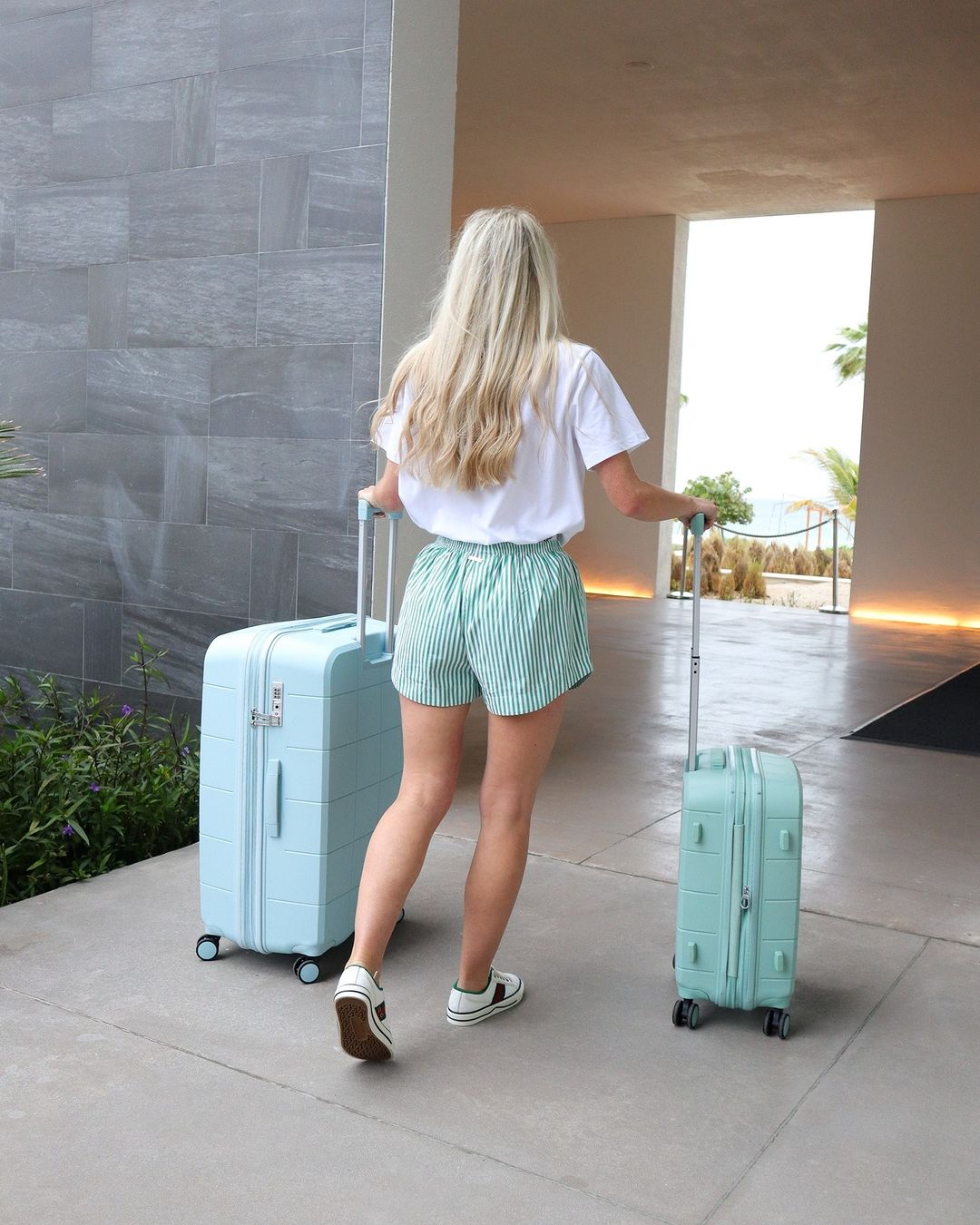
This might seem like a minor feature, but luggage appearance can actually be practical.
If your suitcase looks distinctive, it may be easier to identify among other bags.
Black suitcases are classic and versatile, but large numbers of travellers use similar colours.
Choosing a distinctive colour, pattern or design can make your luggage easier to recognise.
You can also use a luggage tag or another permitted identifier to help distinguish your suitcase.
A suitcase's size does not automatically tell you how much you should pack into it.
A large suitcase can hold a considerable amount of clothing, but filling every available space can make it difficult to transport.
For air travel, the relevant limit is usually determined by the airline's baggage policy.
Always check the current allowance for your particular booking.
If you're buying luggage specifically for flying, choosing a lightweight suitcase can give you more flexibility within the permitted weight limit.
The choice between hard and soft luggage depends on your priorities.
Hard shell suitcases can be appealing if you want:
Soft luggage can be useful if you prefer:
Neither option is automatically right for every traveller.
Focus on the construction and features of the individual suitcase rather than choosing solely based on its category.
Very important.
A suitcase handle is something you'll use repeatedly throughout your journey.
An uncomfortable or unstable handle can make even a lightweight suitcase difficult to manoeuvre.
Ideally, the handle should extend smoothly and feel secure when you're pulling the case.
If you're shopping online, check product specifications and customer feedback where available.
When purchasing luggage, check whether the manufacturer or retailer provides warranty coverage.
A warranty can give you additional information about the manufacturer's confidence in the product and may provide protection against certain manufacturing defects.
However, warranty terms vary.
Read the conditions carefully so you understand what is and isn't covered.
You don't necessarily need every possible feature.
Instead, prioritise the features that match your travel habits.
For a frequent flyer, weight, wheels, durability and handle quality may be particularly important.
For a weekend traveller, compact size, organisation and lightweight construction may matter more.
For long holidays, capacity, durability and interior organisation can become priorities.
For business travel, compartments, manoeuvrability and professional design may be especially useful.
For family travel, capacity, durability and easy identification can make luggage more practical.
Before buying a suitcase, ask yourself:
If the answer to these questions matches your needs, you're much more likely to end up with luggage that works well for your travel style.
Knowing what to look for in a good suitcase can save you from choosing luggage based purely on appearance.
Size, material, wheels, handles, weight, interior organisation, security, storage and durability all contribute to the overall travel experience.
The most expensive suitcase isn't necessarily the right one, and the suitcase with the most features isn't automatically the best choice.
Instead, look for luggage that matches the way you actually travel.
A good suitcase should be easy to manoeuvre, practical to pack, durable enough for regular use and appropriately sized for your trips.
Choose those features carefully, and your luggage can become one of the most useful travel investments in your wardrobe.
Looking for practical and stylish luggage for your next journey?
Explore the luggage collection at Upper Class Fashion to discover suitcase options for different travel needs, from short weekend breaks to longer holidays.
Choose the size, features and design that fit your travel style, pack efficiently and make your next trip easier from the moment you leave home.


ON YOUR ORDER WHEN YOU SIGN UP FOR EMAIL