


Suitcase Sizes Explained: Cabin, Medium and Large Luggage Guide
, by Tariq Rehman, 9 min reading time
, by Tariq Rehman, 9 min reading time
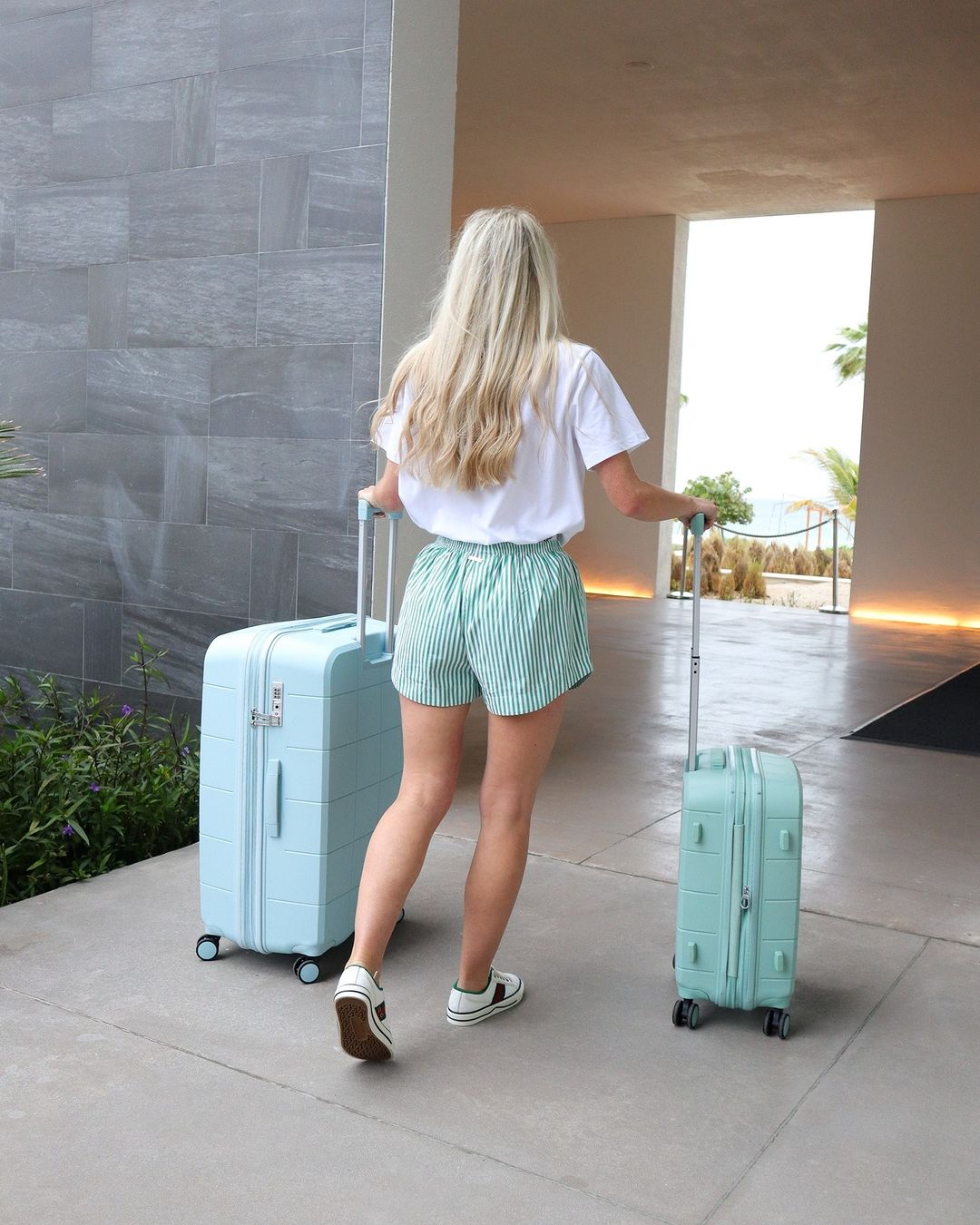
Confused about suitcase sizes? This complete luggage size guide explains cabin, small, medium and large suitcases, including what each size is best for, how much you can typically pack and how to choose the right luggage for weekend trips, holidays, business travel and longer journeys.
Choosing the right suitcase size can make a major difference to your travel experience. Pick one that is too small and you may struggle to fit everything you need. Choose one that is unnecessarily large and you could end up carrying extra weight or paying more for checked baggage.
With so many luggage options available, understanding the differences between cabin, small, medium and large suitcases makes choosing much easier.
The right size depends on several factors, including how long you're travelling, whether you are flying, how much you normally pack and whether your luggage will be carried onto the plane or checked in.
In this guide, we'll explain the most common suitcase sizes and what each one is best suited for.

Suitcase sizes can vary between brands, so there isn't one universal measurement for every luggage category.
However, suitcases are commonly divided into four broad groups:
Some luggage collections also include extra-large suitcases.
Before buying, always check the exact dimensions and weight of the suitcase rather than relying only on labels such as "medium" or "large."
Cabin suitcases are designed to be compact enough for use as carry-on luggage, subject to the airline's specific size and weight restrictions.
They are usually the smallest traditional suitcase category and are popular for short trips.
Cabin luggage is ideal for:
A well-organised cabin suitcase can hold clothing, toiletries, electronics and other essentials for a short trip.
However, how much you can pack depends heavily on your packing style and the dimensions of the individual suitcase.
The biggest advantage is convenience.
When your airline allows a particular cabin suitcase, you can avoid checking a bag and potentially save time at baggage collection after landing.
However, airline cabin baggage policies vary, so always check the current requirements for your flight.
Small suitcases sit between traditional cabin luggage and larger checked bags.
They can be useful for travellers who want more space than a compact carry-on but do not need a large suitcase.
Depending on the specific dimensions, some small suitcases may qualify as cabin baggage with certain airlines, while others may need to be checked.
This is why checking the exact measurements is important.
Small luggage can be suitable for:
If you prefer travelling light but need more space than a standard cabin case, a small suitcase can be a useful middle ground.
Medium suitcases are one of the most versatile choices for travellers.
They offer considerably more packing space than cabin luggage without being as bulky as large suitcases.
Medium luggage is often suitable for trips lasting around a week, although the actual capacity required depends on your clothing, footwear and packing habits.
A medium suitcase can typically accommodate a combination of:
Packing cubes can also help organise the interior and make better use of available space.
Medium suitcases are particularly useful for:
For many travellers, medium luggage offers a practical balance between capacity and portability.

Large suitcases are designed for travellers who need substantial packing capacity.
They are generally intended for checked baggage rather than cabin use.
Large luggage can be useful for longer holidays, winter travel or trips where you need to pack additional footwear, clothing and personal belongings.
Consider a large suitcase for:
However, bigger isn't always better.
A large suitcase can encourage overpacking, and filling it completely may result in a bag that is difficult to move or exceeds an airline's weight allowance.
Extra-large luggage is designed for travellers who require maximum capacity.
These suitcases can be useful for extended travel, moving between countries or transporting a large amount of clothing and personal belongings.
However, extra-large cases require careful consideration.
A very large suitcase can become heavy quickly, especially when filled with shoes, toiletries, books or other dense items.
Before purchasing one, consider whether you actually need the additional capacity.
Understanding the basic differences can make your choice easier.
| Suitcase Type | Best For | Typical Use |
|---|---|---|
| Cabin | Short trips | Carry-on travel |
| Small | Short breaks | Light travel |
| Medium | Around a week | Checked luggage |
| Large | Longer holidays | Checked luggage |
| Extra-large | Extended travel | High-capacity packing |
These categories are general guidelines. Exact dimensions and capacity vary between luggage brands and individual models.

For a weekend trip, a cabin or small suitcase will usually be sufficient for many travellers.
A couple of outfits, toiletries, footwear and everyday essentials can often fit comfortably into compact luggage when packed efficiently.
If you're travelling somewhere cold, however, bulky coats and knitwear may require additional space.
For a typical week-long holiday, a medium suitcase can provide a useful amount of packing space.
It gives you enough room for multiple outfits while remaining easier to handle than a very large suitcase.
If you're a minimalist packer, you may be able to travel for a week with smaller luggage.
The key is to consider what you actually need rather than automatically choosing a larger case.
For a two-week holiday, many travellers will prefer a large suitcase.
This gives you additional room for clothing, shoes and personal items.
However, packing for two weeks doesn't necessarily mean taking 14 completely different outfits.
Planning outfits in advance and choosing versatile clothing can reduce the amount of luggage you need.

Winter travel presents a different packing challenge.
Jackets, jumpers, boots and heavier fabrics take up significantly more space than summer clothing.
For a winter holiday, a medium or large suitcase may therefore be more practical.
If you need bulky footwear, consider wearing your largest pair while travelling rather than packing them inside the suitcase.
Business travellers often prioritise convenience and organisation.
For a short business trip, cabin luggage can be ideal because it allows you to travel efficiently while keeping important items close at hand.
For longer business trips, medium luggage may provide enough space for formal clothing without requiring a very large suitcase.
Look for luggage with compartments that make it easy to separate clothing, shoes, electronics and documents.
Before buying a suitcase, ask yourself five questions:
The longer the trip, the more space you may need—but trip duration alone shouldn't determine your suitcase size.
Summer clothing is generally easier to pack than thick winter layers.
If so, check your airline's current cabin and checked baggage requirements.
Minimalist travellers may need considerably less luggage than someone who likes to bring multiple outfit options.
A suitcase that is technically large enough isn't useful if it becomes difficult to lift, roll or manoeuvre.

One of the most important things to remember when buying luggage is that terms such as "cabin," "medium" and "large" are not exact universal measurements.
Different manufacturers may use different dimensions.
Always look at:
If you're flying, compare the suitcase's dimensions with your airline's baggage requirements before purchasing.
The weight of the empty suitcase is just as important as its size.
A large suitcase may offer plenty of storage, but if the case itself is heavy, you have less of your baggage allowance available for your belongings.
Lightweight luggage can therefore be particularly useful for air travel.
Understanding suitcase sizes makes it easier to choose luggage that matches your travel plans.
Cabin suitcases are convenient for short trips and carry-on travel. Small suitcases offer additional space without becoming too bulky. Medium luggage is a versatile option for longer trips, while large suitcases provide the capacity needed for extended holidays and heavier packing.
The best suitcase isn't necessarily the biggest one.
Instead, choose a size that gives you enough room for your essentials while remaining practical to transport.
Consider your trip length, clothing, travel method, packing habits and airline restrictions before making your decision.
Whether you're planning a weekend city break, a week-long holiday or an extended international trip, having the right suitcase can make packing and travelling much easier.
Explore the luggage and suitcase collection at Upper Class Fashion to find travel options suited to different trip lengths and packing needs.
Choose your suitcase carefully, pack efficiently and you'll be ready for your next journey with luggage that works for you.


ON YOUR ORDER WHEN YOU SIGN UP FOR EMAIL